
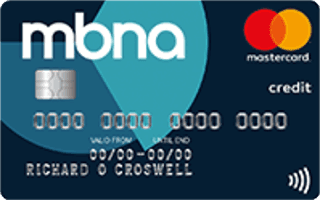
In the UK financial market, generalist banks offer credit cards as a side product. MBNA, however, is a specialist. For decades, this brand has focused almost exclusively on lending, and their “Long Balance Transfer” offer is widely regarded as one of the most flexible tools for debt consolidation available today.
While many cards allow you to pay off other credit cards, the MBNA Long Balance Transfer Card has a unique ace up its sleeve: it can also help you clear your bank overdraft or a personal loan.
In this review, we will explore the dual power of Balance Transfers and Money Transfers, analyse the cost of the transfer fees, and determine if this specialist card is the right strategic move to organise your finances.
The Core Proposition: Pausing Your Interest
If you are currently servicing debt on cards from providers like Barclaycard, Capital One, or Santander, you are likely paying an APR of over 24%. This means a significant portion of your monthly payment is being swallowed by interest, rather than reducing your actual debt.
The MBNA Long Balance Transfer Card offers a simple solution: a massive 0% interest window.
Currently, MBNA offers qualified applicants a 0% period that often rivals the longest on the market (typically up to 28 or 29 months, depending on the specific offer at the time of application).
By moving your existing balances to MBNA, you effectively “freeze” the debt. For over two years, every pound you repay attacks the capital directly. This can shave years off your debt-free date and save you hundreds of pounds in interest charges.
You will remain on the current site.
The Secret Weapon: Money Transfers
This is where MBNA differentiates itself from competitors like Halifax or Virgin Money. Most balance transfer cards typically only allow you to pay off other credit cards.
MBNA allows you to perform “Money Transfers”.
A Money Transfer allows you to move credit from your MBNA card directly into your UK current account as cash.
- Why is this useful? You can use this cash to pay off a bank overdraft (which often charges 39.9% EAR) or a high-interest personal loan.
- The Benefit: You can then pay back this “cash” to MBNA at 0% interest for a promotional period (usually slightly shorter than the Balance Transfer period, e.g., 12-18 months), giving you a breathing space that standard balance transfer cards cannot provide.
The “Clever Check”: Protecting Your Credit Score
Applying for credit when you already have debt can be stressful. A rejection can damage your credit score further. MBNA addresses this with their “Clever Check” eligibility tool.
Before you submit a full application, this tool performs a “Soft Search” on your credit file.
- It tells you your likelihood of approval.
- Crucially, it gives you a guaranteed credit limit (subject to final checks).
- Other lenders cannot see this search, so your credit rating remains safe if you are not eligible.
Knowing your credit limit upfront is a massive advantage. It allows you to know exactly how much debt you can consolidate before you commit to the card.
The Costs: Transfer Fees Explained
Like all premium balance transfer products, this convenience comes with a cost. You need to be aware of the “Transfer Fee”.
- Balance Transfer Fee: To move debt from another card to MBNA, you will typically pay a fee (often between 2.99% and 3.49%) of the amount transferred.
- Money Transfer Fee: Transferring cash to your bank usually incurs a slightly higher fee (often around 4%).
Is the fee worth it? almost always.
- Scenario: You have a £3,000 overdraft charging you 40% interest.
- Solution: You pay a 4% fee (£120) to move it to MBNA. You then pay 0% interest for 18 months. The £120 fee is tiny compared to the £1,000+ you might save in overdraft interest.
Restrictions You Must Know
As MBNA is part of the Lloyds Banking Group, there are strict internal transfer rules. You cannot transfer balances from other cards within the same group. This includes:
- Halifax
- Lloyds Bank
- Bank of Scotland
If your debt is held with any of these three banks, the MBNA card cannot help you. You would need to look at a competitor like Barclaycard or Virgin Money instead.
Pros and Cons: A Balanced View
Pros (The Strengths)
- Flexibility: One of the few cards offering both long Balance Transfers and Money Transfers.
- App Experience: The MBNA app is highly rated, allowing you to manage transfers and payments easily.
- Eligibility Transparency: The “Clever Check” provides a credit limit indication before you apply.
- Paperless: A strong focus on digital management.
Cons (The Weaknesses)
- Group Restrictions: Cannot accept transfers from Halifax or Lloyds.
- Risk Based Pricing: Not everyone gets the longest 0% period; some may be offered a shorter duration based on their credit score.
- Fees: The transfer fees can be higher than some “fee-free” shorter cards.
Is the MBNA Card Right for You?
The MBNA Long Balance Transfer Card is designed for the strategic borrower.
If you have a mix of debts—perhaps a credit card balance and a stubborn overdraft—this card is a “Swiss Army Knife” solution. It allows you to consolidate different types of debt under one roof (or rather, one app) and pause the interest payments for a significant period.
However, it requires discipline. The 0% period is not indefinite. The goal must be to clear the debt within the promotional window. If you are disciplined and ready to tackle your finances head-on, MBNA provides the perfect toolkit to do it.
Next Steps: Shall we proceed to the APPLY guide for the MBNA Card? I will focus on the “Clever Check” process and the specific details of setting up a Money Transfer during application.
You will remain on the current site.